2025
Cognitive Bricks
Reimagining Learning Through Structured Play
Application
User Design
Know More
Learning broken into building blocks, designed to grow curiosity, logic, and confidence, one concept at a time.
Designing Learning That Thinks Like a Student
Cognitive Bricks is an exploration of how thoughtful UI/UX design can transform learning into an interactive, curiosity-driven experience. By combining research, cognitive principles, and visual storytelling, the project demonstrates how education can be both structured and playful without losing depth.

Problem
Bridging the Gap Between Learning and Engagement
Traditional learning methods often struggle to keep students engaged while building strong foundational understanding. Cognitive Bricks was conceived to address this gap by combining education with play, helping students learn complex concepts through interaction, experimentation, and visual thinking. The challenge was to design an intuitive app experience that could support different learning styles while remaining simple enough for students to use independently. The product needed to encourage curiosity, reinforce logical thinking, and make learning feel rewarding rather than overwhelming.

Solution
Designing an Intuitive, Gamified Learning Experience
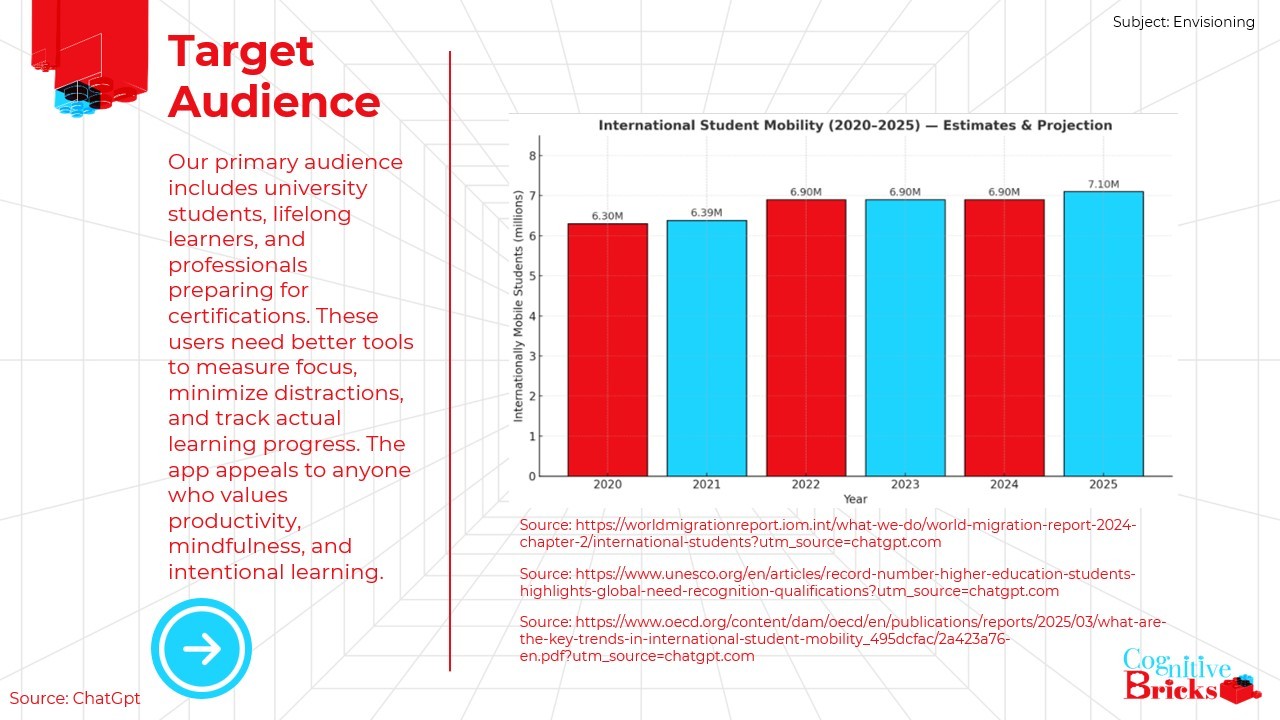
The final solution was a clean, student-friendly app interface built around interaction, clarity, and progression. Each learning module was designed as a visual block, allowing students to build concepts step by step while receiving instant feedback. The UI emphasized simplicity, approachable typography, and strong visual cues to guide users without cognitive overload. Interactive elements encouraged experimentation, while clear progress indicators helped students understand their learning journey. The overall experience was designed to support both independent learning and guided instruction, making complex ideas easier to grasp through play, structure, and visual logic.

Concept
Understanding How Students Think and Learn
The design process began with studying how students engage with educational content, focusing on attention span, interaction patterns, and cognitive load. I analyzed existing educational apps and gamified learning platforms to identify gaps in usability, motivation, and content clarity. This research highlighted the importance of modular learning, visual feedback, and progressive difficulty. Based on these insights, the concept of “bricks” emerged small, structured learning units that students could stack, combine, and experiment with, mirroring the way understanding is built over time. The ideation phase focused on making learning exploratory while maintaining clear structure and measurable progress.
Making Learning Engaging, Structured, and Accessible:
Simplified complex concepts into modular learning units that improved clarity and retention
Encouraged active participation through interaction rather than passive consumption
Reduced cognitive load with clean layouts and visual progression cues
Created a scalable learning framework adaptable across subjects and age groups
Delivered a student-first experience that balanced education with engagement
More Works
(GQ® — 02)
©2024


FAQ
01
How do you define and frame a design problem?
02
How do you decide what to design first when time is limited?
03
How do you balance user needs with business goals?
04
What does your typical design process look like from start to finish?
05
How do user insights influence your final designs?
06
How do you respond to feedback or critique?
2025
Cognitive Bricks
Reimagining Learning Through Structured Play
Application
User Design
Know More
Learning broken into building blocks, designed to grow curiosity, logic, and confidence, one concept at a time.
Designing Learning That Thinks Like a Student
Cognitive Bricks is an exploration of how thoughtful UI/UX design can transform learning into an interactive, curiosity-driven experience. By combining research, cognitive principles, and visual storytelling, the project demonstrates how education can be both structured and playful without losing depth.
Problem
Bridging the Gap Between Learning and Engagement
Traditional learning methods often struggle to keep students engaged while building strong foundational understanding. Cognitive Bricks was conceived to address this gap by combining education with play, helping students learn complex concepts through interaction, experimentation, and visual thinking. The challenge was to design an intuitive app experience that could support different learning styles while remaining simple enough for students to use independently. The product needed to encourage curiosity, reinforce logical thinking, and make learning feel rewarding rather than overwhelming.
Solution
Designing an Intuitive, Gamified Learning Experience
The final solution was a clean, student-friendly app interface built around interaction, clarity, and progression. Each learning module was designed as a visual block, allowing students to build concepts step by step while receiving instant feedback. The UI emphasized simplicity, approachable typography, and strong visual cues to guide users without cognitive overload. Interactive elements encouraged experimentation, while clear progress indicators helped students understand their learning journey. The overall experience was designed to support both independent learning and guided instruction, making complex ideas easier to grasp through play, structure, and visual logic.
Concept
Understanding How Students Think and Learn
The design process began with studying how students engage with educational content, focusing on attention span, interaction patterns, and cognitive load. I analyzed existing educational apps and gamified learning platforms to identify gaps in usability, motivation, and content clarity. This research highlighted the importance of modular learning, visual feedback, and progressive difficulty. Based on these insights, the concept of “bricks” emerged small, structured learning units that students could stack, combine, and experiment with, mirroring the way understanding is built over time. The ideation phase focused on making learning exploratory while maintaining clear structure and measurable progress.
Making Learning Engaging, Structured, and Accessible:
Simplified complex concepts into modular learning units that improved clarity and retention
Encouraged active participation through interaction rather than passive consumption
Reduced cognitive load with clean layouts and visual progression cues
Created a scalable learning framework adaptable across subjects and age groups
Delivered a student-first experience that balanced education with engagement
More Works
(GQ® — 02)
©2024
FAQ
01
How do you define and frame a design problem?
02
How do you decide what to design first when time is limited?
03
How do you balance user needs with business goals?
04
What does your typical design process look like from start to finish?
05
How do user insights influence your final designs?
06
How do you respond to feedback or critique?
2025
Cognitive Bricks
Reimagining Learning Through Structured Play
Application
User Design
Know More
Learning broken into building blocks, designed to grow curiosity, logic, and confidence, one concept at a time.
Designing Learning That Thinks Like a Student
Cognitive Bricks is an exploration of how thoughtful UI/UX design can transform learning into an interactive, curiosity-driven experience. By combining research, cognitive principles, and visual storytelling, the project demonstrates how education can be both structured and playful without losing depth.
Problem
Bridging the Gap Between Learning and Engagement
Traditional learning methods often struggle to keep students engaged while building strong foundational understanding. Cognitive Bricks was conceived to address this gap by combining education with play, helping students learn complex concepts through interaction, experimentation, and visual thinking. The challenge was to design an intuitive app experience that could support different learning styles while remaining simple enough for students to use independently. The product needed to encourage curiosity, reinforce logical thinking, and make learning feel rewarding rather than overwhelming.
Solution
Designing an Intuitive, Gamified Learning Experience
The final solution was a clean, student-friendly app interface built around interaction, clarity, and progression. Each learning module was designed as a visual block, allowing students to build concepts step by step while receiving instant feedback. The UI emphasized simplicity, approachable typography, and strong visual cues to guide users without cognitive overload. Interactive elements encouraged experimentation, while clear progress indicators helped students understand their learning journey. The overall experience was designed to support both independent learning and guided instruction, making complex ideas easier to grasp through play, structure, and visual logic.
Concept
Understanding How Students Think and Learn
The design process began with studying how students engage with educational content, focusing on attention span, interaction patterns, and cognitive load. I analyzed existing educational apps and gamified learning platforms to identify gaps in usability, motivation, and content clarity. This research highlighted the importance of modular learning, visual feedback, and progressive difficulty. Based on these insights, the concept of “bricks” emerged small, structured learning units that students could stack, combine, and experiment with, mirroring the way understanding is built over time. The ideation phase focused on making learning exploratory while maintaining clear structure and measurable progress.
Making Learning Engaging, Structured, and Accessible:
Simplified complex concepts into modular learning units that improved clarity and retention
Encouraged active participation through interaction rather than passive consumption
Reduced cognitive load with clean layouts and visual progression cues
Created a scalable learning framework adaptable across subjects and age groups
Delivered a student-first experience that balanced education with engagement
More Works
©2024
FAQ
How do you define and frame a design problem?
How do you decide what to design first when time is limited?
How do you balance user needs with business goals?
What does your typical design process look like from start to finish?
How do user insights influence your final designs?
How do you respond to feedback or critique?