2024
MC Donalds
Turning consumer backlash into strategic insight through research, speed, and brand-led design.
Presentation
Report
Know More
Understanding consumer sentiment, decoding brand trust, and transforming controversy into actionable insight through research-driven storytelling.
Inside the McDonald’s Consumer Insight Study
A research-led presentation that examined the impact of the cheese controversy on McDonald’s brand perception in India. The project combined consumer sentiment analysis, competitor benchmarking, and brand-driven visual storytelling to translate complex insights into an engaging, decision-ready narrative delivered under a tight two-day timeline and instrumental in securing McDonald’s as a client.
Problem
Understanding the Impact of the Cheese Controversy
McDonald’s faced significant consumer backlash in India following the cheese controversy, raising questions around trust, quality, and transparency. The objective of this project was to study how Indian consumers perceived the brand during and after the controversy, and whether it altered sentiment, purchase intent, and long-term brand loyalty. The challenge was twofold: first, to analyze consumer reactions in a culturally sensitive food market like India, and second, to present these findings in a way that could convince McDonald’s to commission the full study. The report needed to be sharp, credible, and engaging enough to stand out when opened directly from an email attachment by the McDonald’s consumer and leadership teams.
Solution
Turning Research into a Brand-Led Visual Narrative
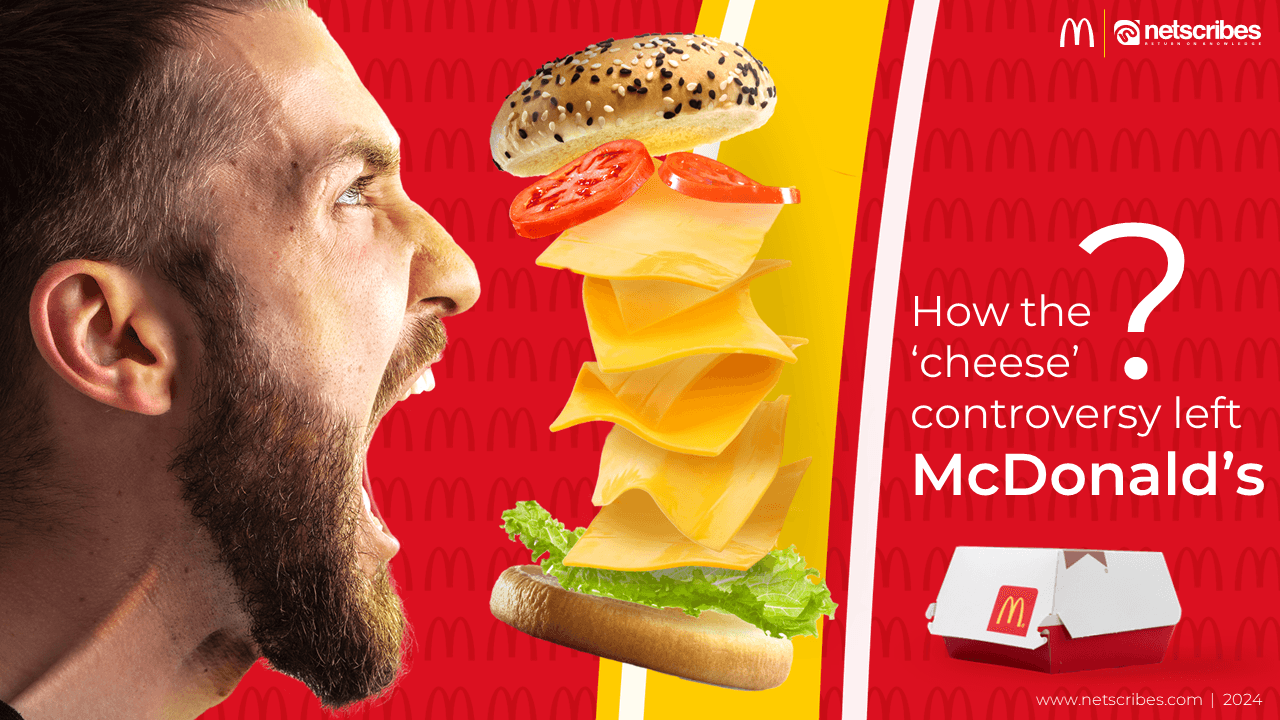
The final solution was a visually immersive, brand-centric presentation designed and delivered within a two-day turnaround. I used McDonald’s original color palette to ensure instant brand recall and increase open rates when the report was received via email. The cover slide featured a bold visual of a man with a wide-open mouth, a burger stacked with ten slices of cheese, and the question “How the cheese controversy left McDonald’s?”, designed to provoke curiosity and engagement.
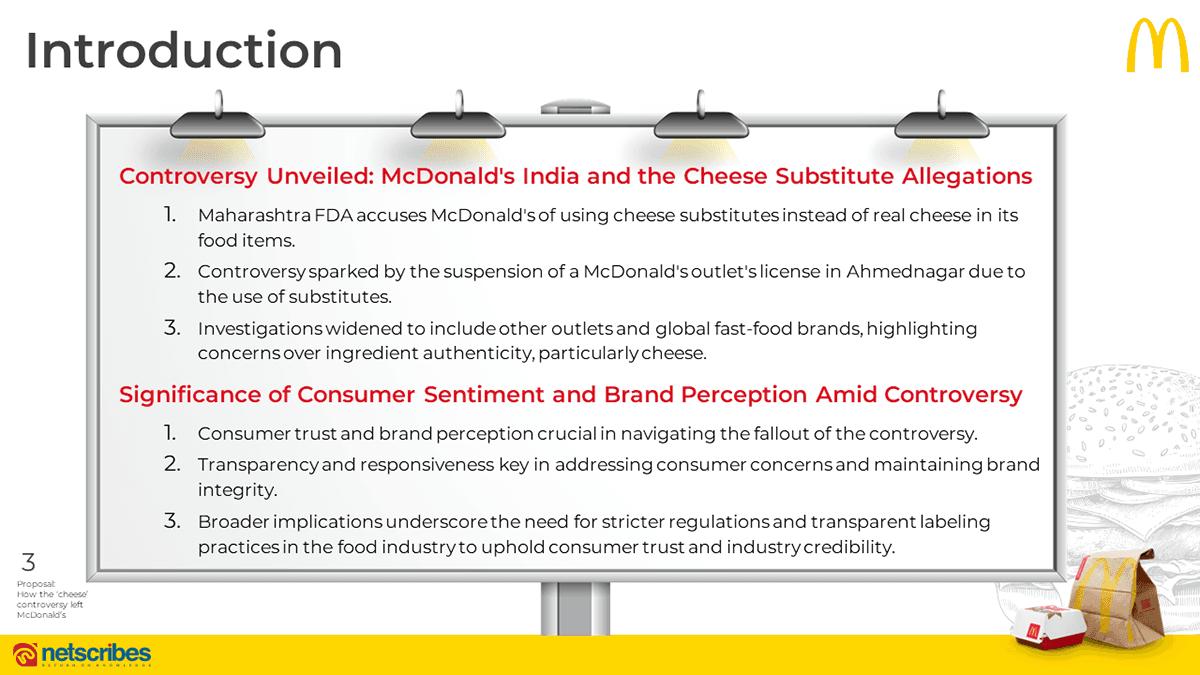
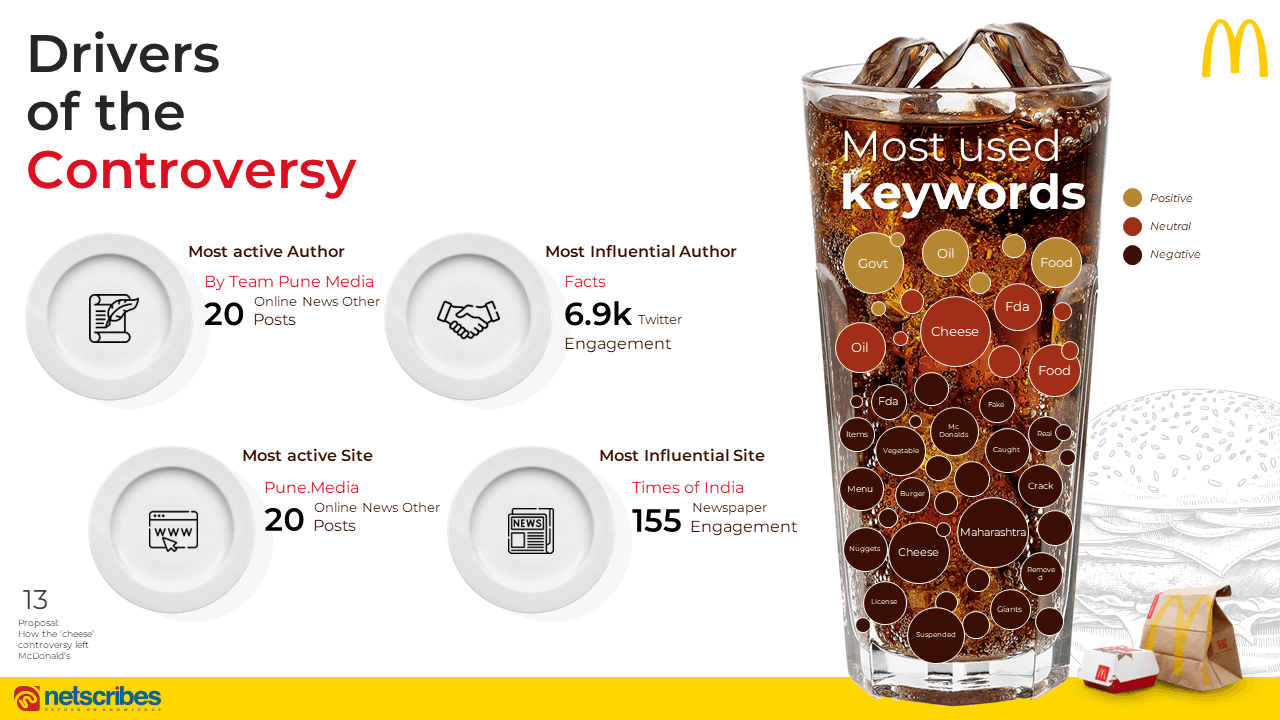
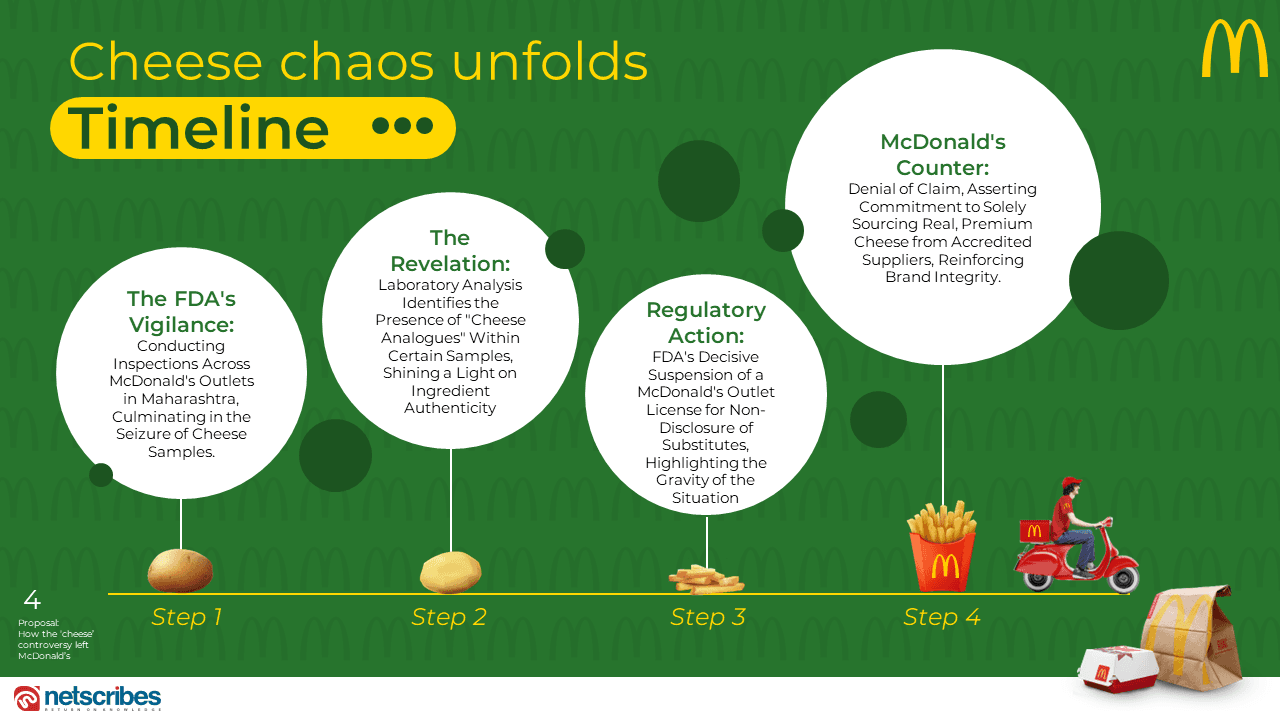
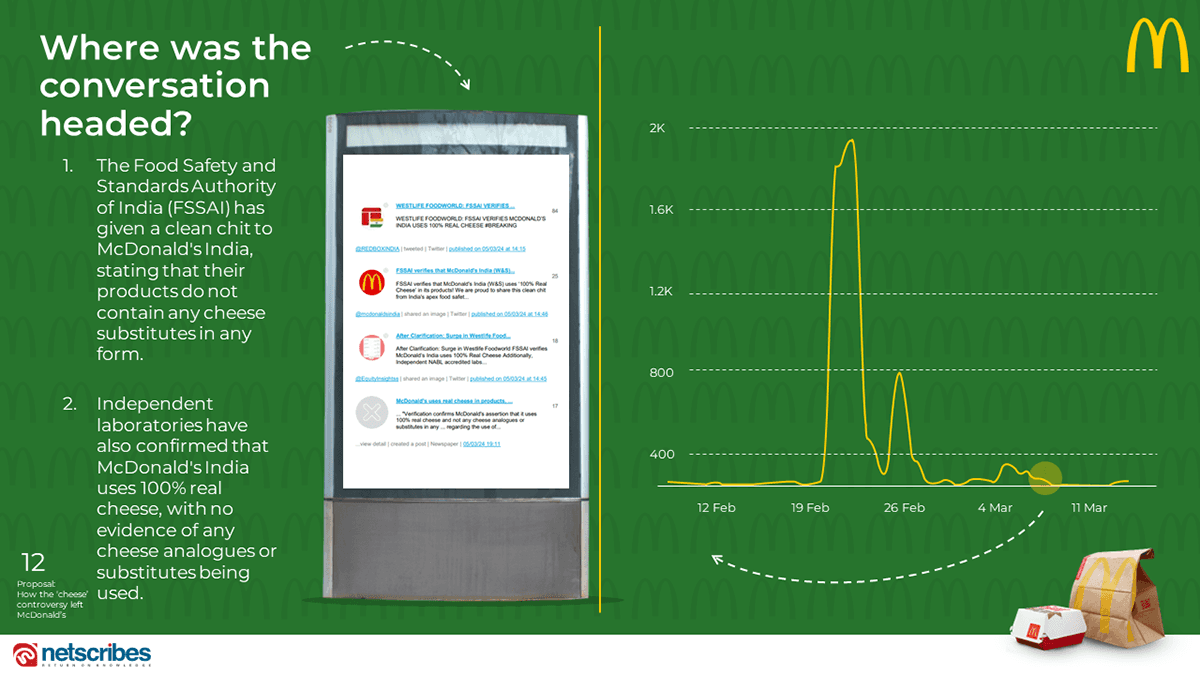
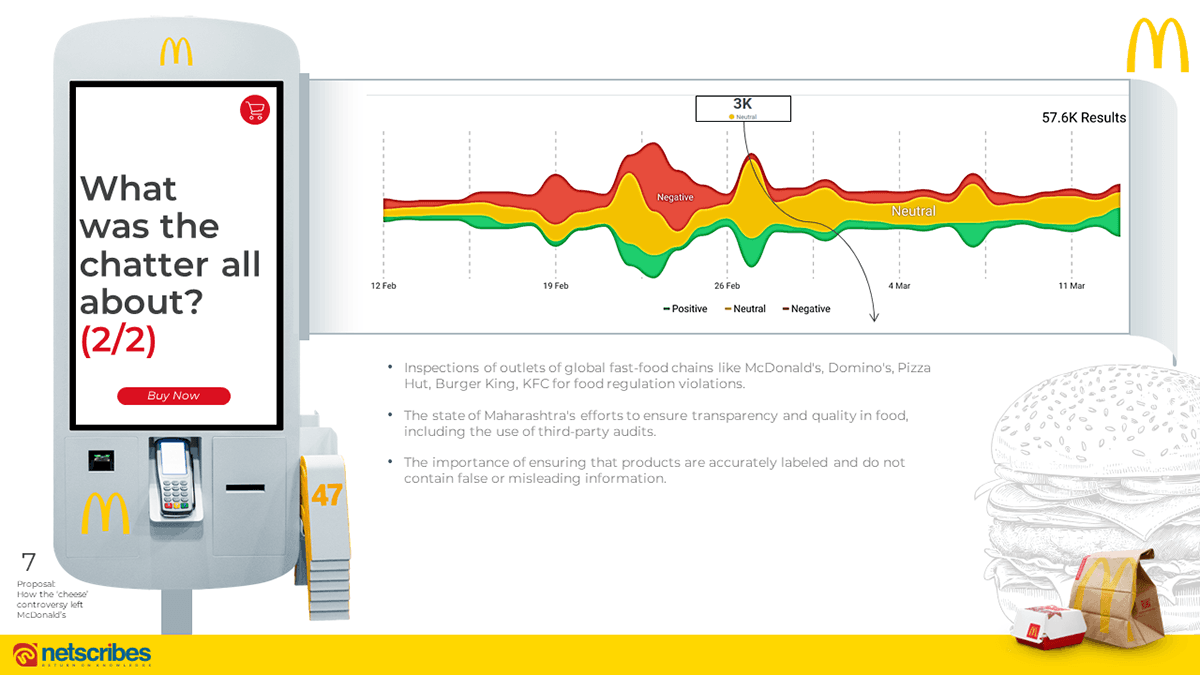
Each slide translated insights into familiar McDonald’s metaphors — recovery steps visualized as the process of making fries, trend charts embedded within self-ordering kiosks, bar graphs represented through stacked fries and cheese layers, and word maps floating inside a Coke glass with hierarchy driven by bubble size. This approach transformed dense consumer research into an intuitive, on-brand experience that felt relevant and engaging. The presentation successfully helped secure McDonald’s as a client for the study, demonstrating the power of research-led storytelling paired with thoughtful design execution.
Concept
Decoding Consumer Sentiment & Brand Response
I began by studying consumer conversations, sentiment patterns, and behavioral shifts related to the controversy, focusing on trust, ingredient perception, and brand accountability. Alongside this, I analyzed how competing QSR brands in India handled food quality concerns, crisis communication, and recovery messaging. This competitor analysis helped identify best practices, missed opportunities, and tone differences in how brands regain consumer confidence. Based on these insights, I structured the content into a clear narrative moving from problem recognition to consumer reaction, trend shifts, and recovery opportunities. The ideation phase focused on making research memorable by mapping insights directly to McDonald’s visual language and everyday product experiences, ensuring the story felt familiar yet insightful to the brand team.
More Works
(GQ® — 02)
©2024
FAQ
01
How do you define and frame a design problem?
02
How do you decide what to design first when time is limited?
03
How do you balance user needs with business goals?
04
What does your typical design process look like from start to finish?
05
How do user insights influence your final designs?
06
How do you respond to feedback or critique?
2024
MC Donalds
Turning consumer backlash into strategic insight through research, speed, and brand-led design.
Presentation
Report
Know More
Understanding consumer sentiment, decoding brand trust, and transforming controversy into actionable insight through research-driven storytelling.
Inside the McDonald’s Consumer Insight Study
A research-led presentation that examined the impact of the cheese controversy on McDonald’s brand perception in India. The project combined consumer sentiment analysis, competitor benchmarking, and brand-driven visual storytelling to translate complex insights into an engaging, decision-ready narrative delivered under a tight two-day timeline and instrumental in securing McDonald’s as a client.
Problem
Understanding the Impact of the Cheese Controversy
McDonald’s faced significant consumer backlash in India following the cheese controversy, raising questions around trust, quality, and transparency. The objective of this project was to study how Indian consumers perceived the brand during and after the controversy, and whether it altered sentiment, purchase intent, and long-term brand loyalty. The challenge was twofold: first, to analyze consumer reactions in a culturally sensitive food market like India, and second, to present these findings in a way that could convince McDonald’s to commission the full study. The report needed to be sharp, credible, and engaging enough to stand out when opened directly from an email attachment by the McDonald’s consumer and leadership teams.
Solution
Turning Research into a Brand-Led Visual Narrative
The final solution was a visually immersive, brand-centric presentation designed and delivered within a two-day turnaround. I used McDonald’s original color palette to ensure instant brand recall and increase open rates when the report was received via email. The cover slide featured a bold visual of a man with a wide-open mouth, a burger stacked with ten slices of cheese, and the question “How the cheese controversy left McDonald’s?”, designed to provoke curiosity and engagement.
Each slide translated insights into familiar McDonald’s metaphors — recovery steps visualized as the process of making fries, trend charts embedded within self-ordering kiosks, bar graphs represented through stacked fries and cheese layers, and word maps floating inside a Coke glass with hierarchy driven by bubble size. This approach transformed dense consumer research into an intuitive, on-brand experience that felt relevant and engaging. The presentation successfully helped secure McDonald’s as a client for the study, demonstrating the power of research-led storytelling paired with thoughtful design execution.
Concept
Decoding Consumer Sentiment & Brand Response
I began by studying consumer conversations, sentiment patterns, and behavioral shifts related to the controversy, focusing on trust, ingredient perception, and brand accountability. Alongside this, I analyzed how competing QSR brands in India handled food quality concerns, crisis communication, and recovery messaging. This competitor analysis helped identify best practices, missed opportunities, and tone differences in how brands regain consumer confidence. Based on these insights, I structured the content into a clear narrative moving from problem recognition to consumer reaction, trend shifts, and recovery opportunities. The ideation phase focused on making research memorable by mapping insights directly to McDonald’s visual language and everyday product experiences, ensuring the story felt familiar yet insightful to the brand team.
More Works
(GQ® — 02)
©2024
FAQ
01
How do you define and frame a design problem?
02
How do you decide what to design first when time is limited?
03
How do you balance user needs with business goals?
04
What does your typical design process look like from start to finish?
05
How do user insights influence your final designs?
06
How do you respond to feedback or critique?
2024
MC Donalds
Turning consumer backlash into strategic insight through research, speed, and brand-led design.
Presentation
Report
Know More
Understanding consumer sentiment, decoding brand trust, and transforming controversy into actionable insight through research-driven storytelling.
Inside the McDonald’s Consumer Insight Study
A research-led presentation that examined the impact of the cheese controversy on McDonald’s brand perception in India. The project combined consumer sentiment analysis, competitor benchmarking, and brand-driven visual storytelling to translate complex insights into an engaging, decision-ready narrative delivered under a tight two-day timeline and instrumental in securing McDonald’s as a client.
Problem
Understanding the Impact of the Cheese Controversy
McDonald’s faced significant consumer backlash in India following the cheese controversy, raising questions around trust, quality, and transparency. The objective of this project was to study how Indian consumers perceived the brand during and after the controversy, and whether it altered sentiment, purchase intent, and long-term brand loyalty. The challenge was twofold: first, to analyze consumer reactions in a culturally sensitive food market like India, and second, to present these findings in a way that could convince McDonald’s to commission the full study. The report needed to be sharp, credible, and engaging enough to stand out when opened directly from an email attachment by the McDonald’s consumer and leadership teams.
Solution
Turning Research into a Brand-Led Visual Narrative
The final solution was a visually immersive, brand-centric presentation designed and delivered within a two-day turnaround. I used McDonald’s original color palette to ensure instant brand recall and increase open rates when the report was received via email. The cover slide featured a bold visual of a man with a wide-open mouth, a burger stacked with ten slices of cheese, and the question “How the cheese controversy left McDonald’s?”, designed to provoke curiosity and engagement.
Each slide translated insights into familiar McDonald’s metaphors — recovery steps visualized as the process of making fries, trend charts embedded within self-ordering kiosks, bar graphs represented through stacked fries and cheese layers, and word maps floating inside a Coke glass with hierarchy driven by bubble size. This approach transformed dense consumer research into an intuitive, on-brand experience that felt relevant and engaging. The presentation successfully helped secure McDonald’s as a client for the study, demonstrating the power of research-led storytelling paired with thoughtful design execution.
Concept
Decoding Consumer Sentiment & Brand Response
I began by studying consumer conversations, sentiment patterns, and behavioral shifts related to the controversy, focusing on trust, ingredient perception, and brand accountability. Alongside this, I analyzed how competing QSR brands in India handled food quality concerns, crisis communication, and recovery messaging. This competitor analysis helped identify best practices, missed opportunities, and tone differences in how brands regain consumer confidence. Based on these insights, I structured the content into a clear narrative moving from problem recognition to consumer reaction, trend shifts, and recovery opportunities. The ideation phase focused on making research memorable by mapping insights directly to McDonald’s visual language and everyday product experiences, ensuring the story felt familiar yet insightful to the brand team.
More Works
©2024
FAQ
How do you define and frame a design problem?
How do you decide what to design first when time is limited?
How do you balance user needs with business goals?
What does your typical design process look like from start to finish?
How do user insights influence your final designs?
How do you respond to feedback or critique?